AI won’t save you, but a mentor might.
I came to a realization at my most recent TheraPro course. I ran an IASTM and cupping course in Austin back at the beginning of May. This was the first of its kind under the TheraPro umbrella, and the class was on the smaller side: 10 people. Given the smaller class size, I decided to do things a little differently. At the beginning of the course, I asked each participant what they wanted to walk away being able to do. Unanimously, they all stated that they would like to be able to explain cupping to their clients, and they would like to have responses for when clients ask what cupping does. I thought to myself, “This will be easy, I will share with them the evidence, the science, and the information that I have, and they will be able to translate that to their clients”.
After a long lecture on the relevant research of these modalities, while the students were practicing, I walked around, and I asked each student, “if your client asked you right now why you were cupping, and what cupping does, what would you tell them?”
And to my surprise, almost all of them struggled to give me a clear, clean, concise answer.
I realized, painfully, since I had just spent an hour lecturing, that they didn’t need information. Not that the information was unnecessary, but that giving them more information was not going to help them assimilate and communicate because those are entirely different skills. In that moment, the value of mentorship became glaring.
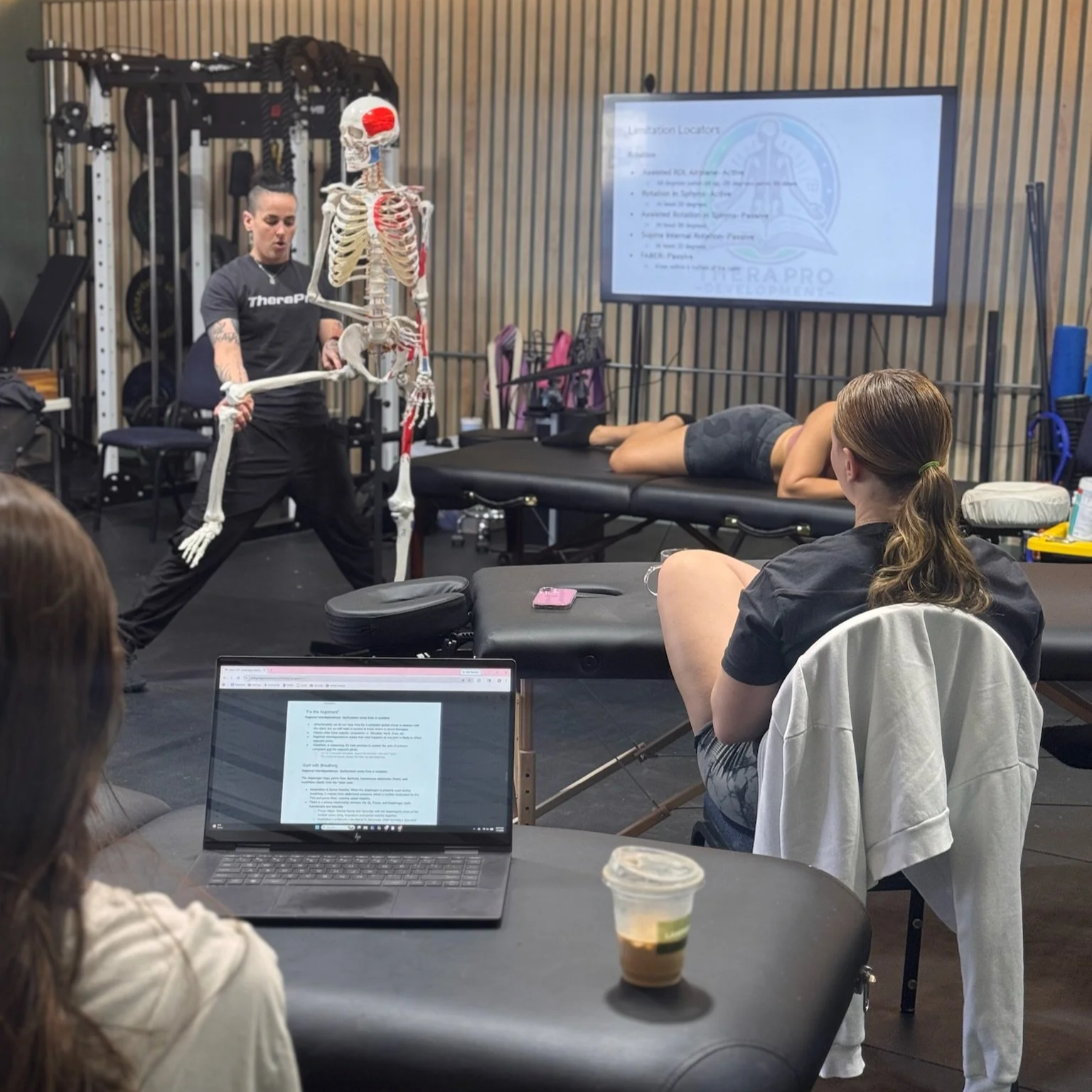
TPL1- Austin, May 2026
Mentorship used to be the way that trades were taught. Back in the day, you didn’t go to school to learn how to be a blacksmith. You simply studied under one. By essentially living with a blacksmith, watching their every move, participating in their mundane blacksmith chores, you learned firsthand how to make all kinds of things out of metal.
Now, in our modern world, we have invented trade schools. They’re necessary because we want to make sure that people are qualified and accredited. One of the best ways to do that is to make them go through a rigorous course or curriculum to ensure that they are educated and qualified to do the job that people will be paying them for.
However, there are some skills that are much harder to teach under a traditional academic curriculum. Some skills can really only be learned through challenge, practice, and experience. For example, I took a debate class in college. I learned all about logic, fallacies, creating doubt, and generating arguments. None of that actually prepared me to speak publicly, let alone debate, because debating, especially compellingly, is so much more than arguing logic.
In another example, I’ve recently taken up trying to learn Spanish. I practice for an hour almost every day, reading, writing, and listening to people speak Spanish. Because of that, I can read in Spanish and understand. I can hear people speak it and generally comprehend. Ask me to speak it? No Bueno. Because “knowing” and communicating are entirely different skills. No, literally, they require completely different areas of the brain. What’s going to help me actually speak Spanish is talking to native speakers and going through the painful process of failing and being corrected over and over again. But the truth is, I need them because they teach me something that an academic understanding of Spanish cannot provide me. In this way, they are mentors.
As the saying goes, get further and get there quicker by hitching yourself to someone else’s trailer. This is what a mentor does. A mentor can get you further, and can get you there quicker because they are sharing the abundant amount of experience that they have, and that cannot be taught in a traditional academic curriculum. You don’t have to learn by making every mistake yourself; you can learn through others, but you have to be around others for that to happen, and this is part of the problem. In the rise of AI, seminars and opportunities for real mentorship are going to be required.
Information will no longer be something that only the experienced or the educated have. Information, and to some degree how to process that information, will be abundant. One could argue that it is already abundant; you just have to know how to find it. We have had the Internet for some time, and access to it has become immensely easier, seeing that almost every single one of us has a smartphone in our pocket, and we can very quickly Google any information we need to find. I think people forget that AI, while in a sense is a new intelligence, it is still based on the information accessible via the Internet, which again is something that we have had for a while now. The only difference, at least in the way I see it, is that we’ve given the information limbs.
AI can write a paper for you, talk to you, mimic your writing style, explain data to you, help you understand conflict in your relationships, and generate an infographic, image, or graph. AI is incredible, and it’s likely going to change our lives in many ways, but I don’t think it can truly replace humans because it doesn’t have human experience. It can do tasks for us, but it cannot be us. AI can share information with you in a way you can understand, but as of right now, it cannot share experience because it doesn’t really have any. A mentor does.
Why does experience matter? Because experience in a specific job/career/profession (especially an abundant amount of it) forces you to hone specific skills and develop more advanced pattern recognition. Let’s use the blacksmith example again.
I could build a robot and install AI that pulls from the internet how to make swords, knives, and axes. I’m sure that robot would build phenomenal weapons, but could it build them specifically for me? It might be able to pull from the internet what size sword I would need based on my height, or the length of my arm, and maybe factor my weight into it.
But a blacksmith would ask, “What do you need it for?”
“What are you going to do with it?”
“Have you used a sword before?”
They’d ask all the right questions to know exactly what kind of metal to make the sword out of, what kind of handle it should have, and what shape would be best for what I planned to use it for.
They’d probably also have you try a few swords to see how you handle the length and the weight
“Here, swing this sword around so I can watch you.”
“How does that feel?”
“Do you like this one, or that one?”
“What do you like about this one? What do you not like about that one?”
If I wanted the robot to do that, I’d have to program it to ask those questions, and it has to “know” what to do with the answers it was given, especially if I didn’t pre-program responses. Further, could the AI watch someone move and know how to tailor the sword specs based on the strength, speed, and flexibility with which that specific person moves?
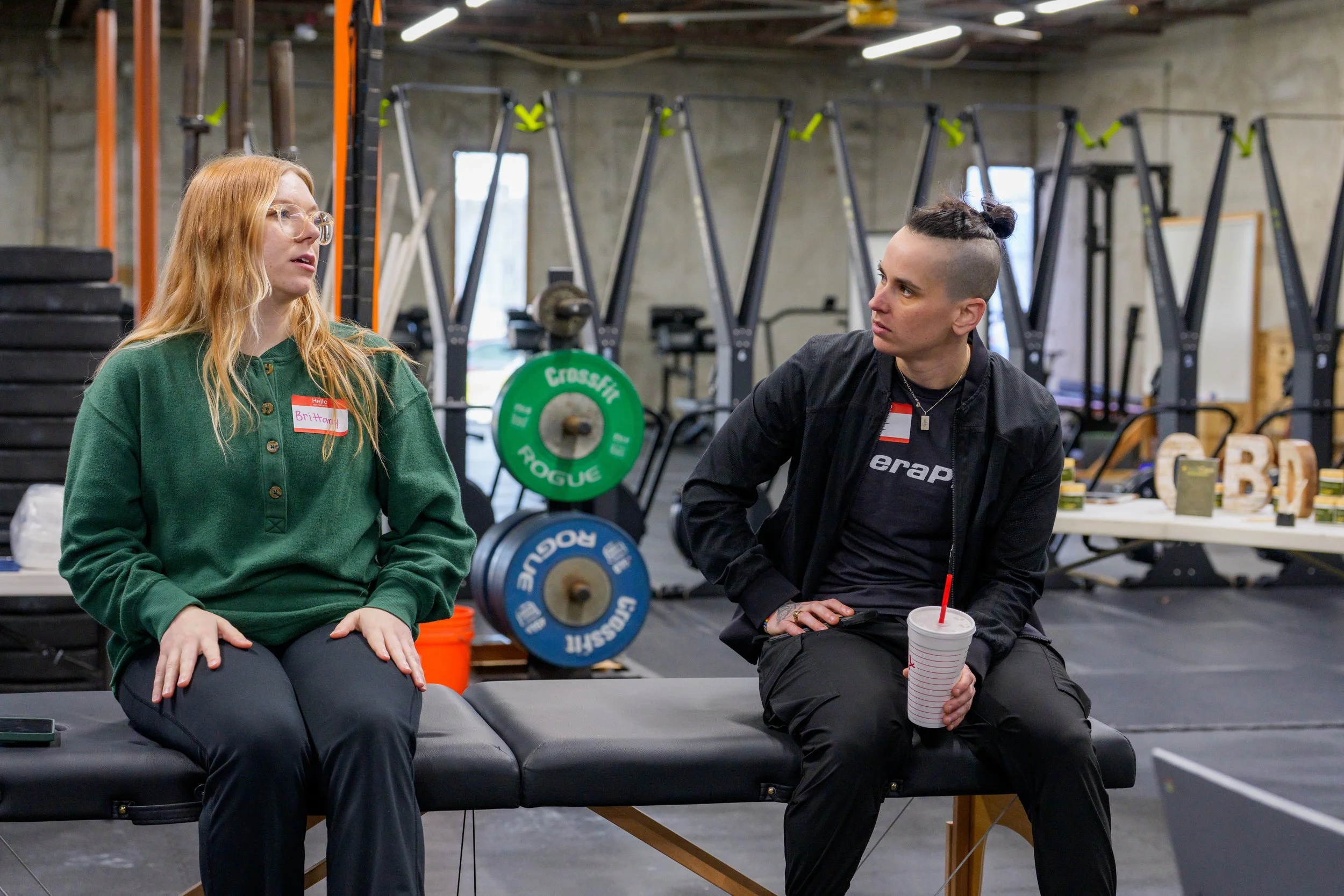
TPL1- Houston, January 2026
This is what I mean when I say specific skills and advanced pattern recognition. How does the blacksmith know what questions to ask, know what movements to have a person do, and how to modify the specs of a weapon to fit the person’s build, movement, and preferences? The communication is so specific, and the assimilation of all this information to produce the right solution, in my opinion, is not something an AI can do (yet). Even if we “fail” the first time, the creativity humans possess to try something different, something new, to solve the problem the second time is also unique to us as humans. (Personally, I have not seen any proof that AI is “creative”; it’s just good at mimicking what has already been created) After all, we have yet to be able to replicate the human brain and its vast neural network that gives us the ability to think in the way that only humans can. AI, while impressive, is no exception to this.
The experience that I had in the classroom, to me, is symbolic of where we are in society right now. That giving people more information is not necessarily the thing that they need to become better, to become more successful, to have a greater impact, or to feel more fulfilled. What most people need is not more information, but rather they need someone to help them with the skills that cannot be learned through information only. They need to be asked the right questions and challenged in just the precise way that forces them to assimilate and practice the specific skills they need to do their job better.
I approached one therapist and asked, “The client wants to know what cupping does. What is your response?”
She immediately jumped into trying to explain fascia, to which I quickly interjected, “The client does not know what fascia is,” and the therapist was paralyzed. She had information, but she did not yet have the skills to hand off that information to the client in a way that the client could understand.
I challenged her again, “speak to your client as if she’s 12”, and of course I didn’t mean that in a demeaning way, but I think that we often overestimate what our clients actually know about our specialty. After all, a lot of us know a lot, we live, eat, and breathe our work sometimes; we know what fascia is, but it doesn’t mean that the client does. What I was really demanding was for her to strip out the fancy language and make it simple and logical to the client, not abstract. I was intentionally challenging her in a way that I knew she would struggle with, but so she could struggle there with me, instead of in front of an actual paying client. Could AI do that?
Do you need a mentor? No. You can learn most skills that you need on your own; it just might take a while, it might take a lot of public struggles, and it will likely be so frustrating at times that you may want to quit. I believe some people do. But instead of struggling in front of clients, instead of trying to assimilate information on your own, instead of making all the mistakes yourself, a mentor can offer a different, quicker path.
They can hold the mirror up and help you see the problem (or yourself) from a different perspective, one you might not have considered before.
They can challenge your thought process to make sure you actually comprehend your own clinical reasoning.
They can literally show you faster and more efficient ways of working that they’ve learned from years of experience.
They can save you from potholes, wrong turns, and mistakes you may make, because they have already been down that road.
I like to think that mentorship will make a return to the professional world. It will be the norm to seek out, hire, and work with mentors to create success in work, careers, relationships, and life. I believe that AI will level the playing field by providing the information and performing some tasks. But those who are successful in the next chapter are the ones who can assimilate faster and communicate more clearly, and those are areas I don’t think AI will help us with anytime soon. To communicate better and assimilate faster, a mentor is likely a much better answer.
(But who knows, maybe I’m wrong)