Chapter 3: Shoulder STMs
Muscle Facts
Proximal attachments: Coracoid Process and the Supraglenoid tubercle of the scapula
Distal attachment: Radial Tuberosity and the Bicipital aponeurosis (fascia of the forearm)
Actions:
Since the bicep crosses both the shoulder and the elbow, it conducts movement of both joints. At the shoulder, the short head in particular is capable of flexion, aka bringing the arm forward. Both heads of the bicep will work together to flex the elbow and supinate the hand (turn the palm up).
A modern-day example of this muscle contracting is tossing a bean bag (like cornhole), where both the shoulder and the elbow flex with a supinated hand.
Unique Features
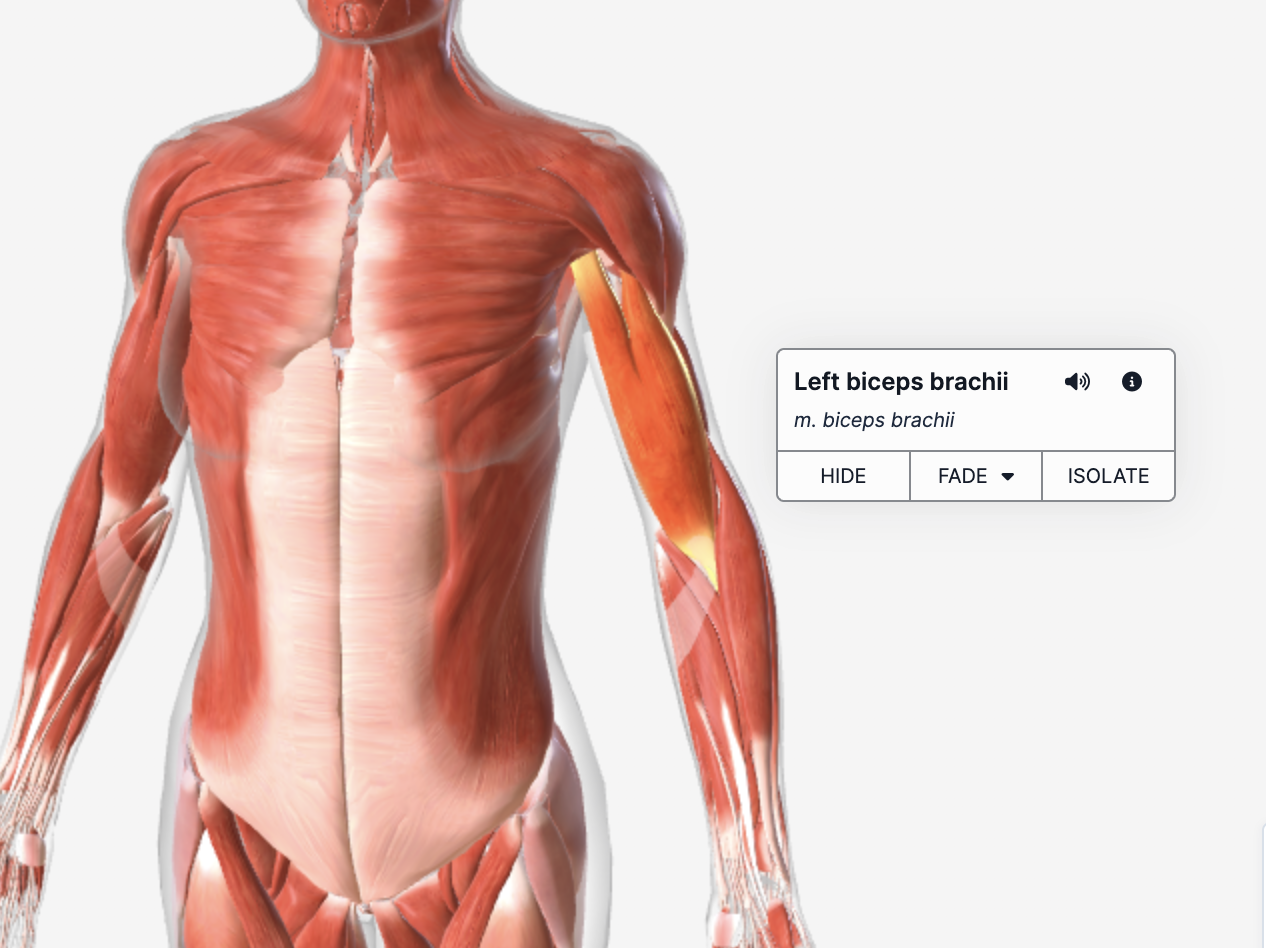
The Latin word “bicep” means 2 heads, in other words, this muscle has 2 proximal attachments. The long head is more lateral whereas the short head is more medial. Given the separate attachments, they can act in different ways. It's a muscle that can move the humerus but doesn't have a direct attachment to the humerus.
The distal tendon of the bicep attaches to the radial tuberosity and also blends into the fascia of the forearm.
Often overlooked as a shoulder flexor, the bicep can play a key role in shoulder pain. The proximal tendon of the long head (lateral) runs through the bicipital (intertubercular) groove of the humerus and can dislocate and pop out. This tendon is prone to becoming irritated in repeated arm flexion and may present with tendonitis or tendinosis.
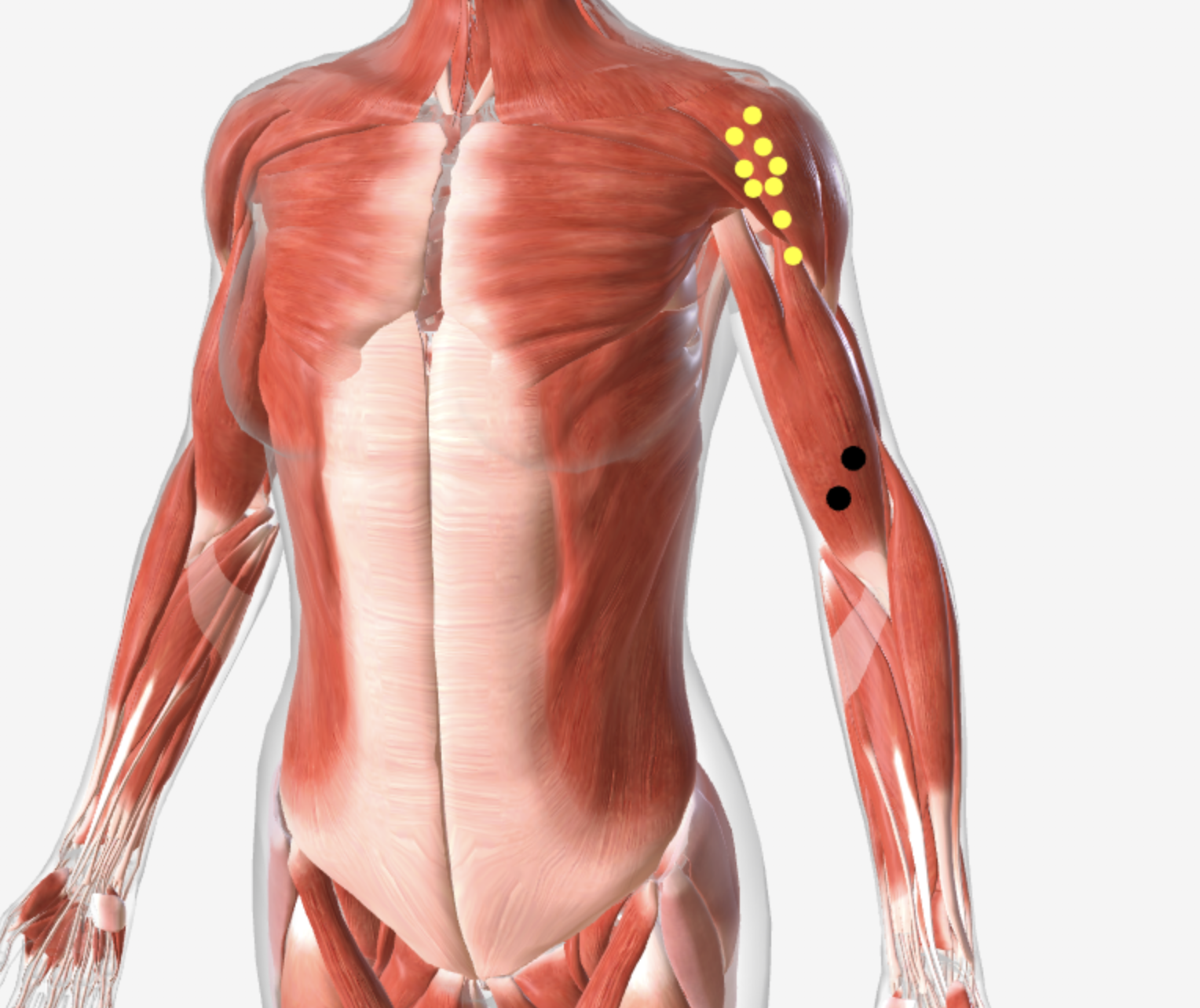
Pain Referral Patterns
The referral pain pattern for the bicep is usually at the proximal attachment of the long head and may present pain in the anterior deltoid region.