Trunk Movement Assessment Pt. 1: Global Flexion (Patreon Exclusive)
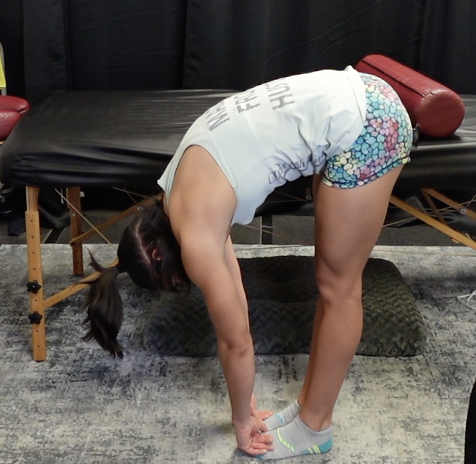
MacroMovement: Global Flexion
Assessing Global flexion gives a massage therapist clinically useful information about load tolerance, tissue extensibility, neuromuscular control, and symptom behavior, all of which directly influence pain presentation, injury risk, and treatment strategy, especially with SI, low back, or hip pain.
Trunk flexion is not just a “range” test; it reflects how the body accepts and distributes load through the lumbar spine (segmental flexion), the thoracolumbar fascia, the hip flexion strategy the client defaults to, and the extensibility of the posterior chain tissues (hamstrings, glutes, fascia).
Why this matters for pain/injury:
If we see poor load sharing, such as more spine flexion than relative hip flexion, we can hypothesize that there may be some tissue overuse (disc, thoracolumbar fascia, paraspinal muscles, etc)
We know that repetitive flexion intolerance is common in low back pain populations. A simple toe touch assessment can tell us if they are flexion sensitive.
For a massage therapist, this informs which tissues are sensitized and potentially overworked, not just “tight" sensations that clients often report.
How to use this:
The global flexion test of the hip, lumbar, and thoracic spine flexion. If the movement is dysfunctional (painful, or doesnt meet the requirements below, We would assess futher the hips, looking at hip flexion and hip rotation, and spine flexion in the focused assessment (Limitation Locators).
Instructions:
The client stands with feet together and toes pointed forward. Instruct the client to bend forward and touch their toes without bending their knees. Instruct the client to look down as they reach.
How to Insruct:
"Keeping your feet together and knees straight, try to bend over and touch your toes. Keep your chin tucked as you do so."
Ideal (Passing criteria):
Touch the toes
Sacral angle of >70 degrees
Uniform Spine Curve
Posterior weight shift (Sacrum shifts over the heels)
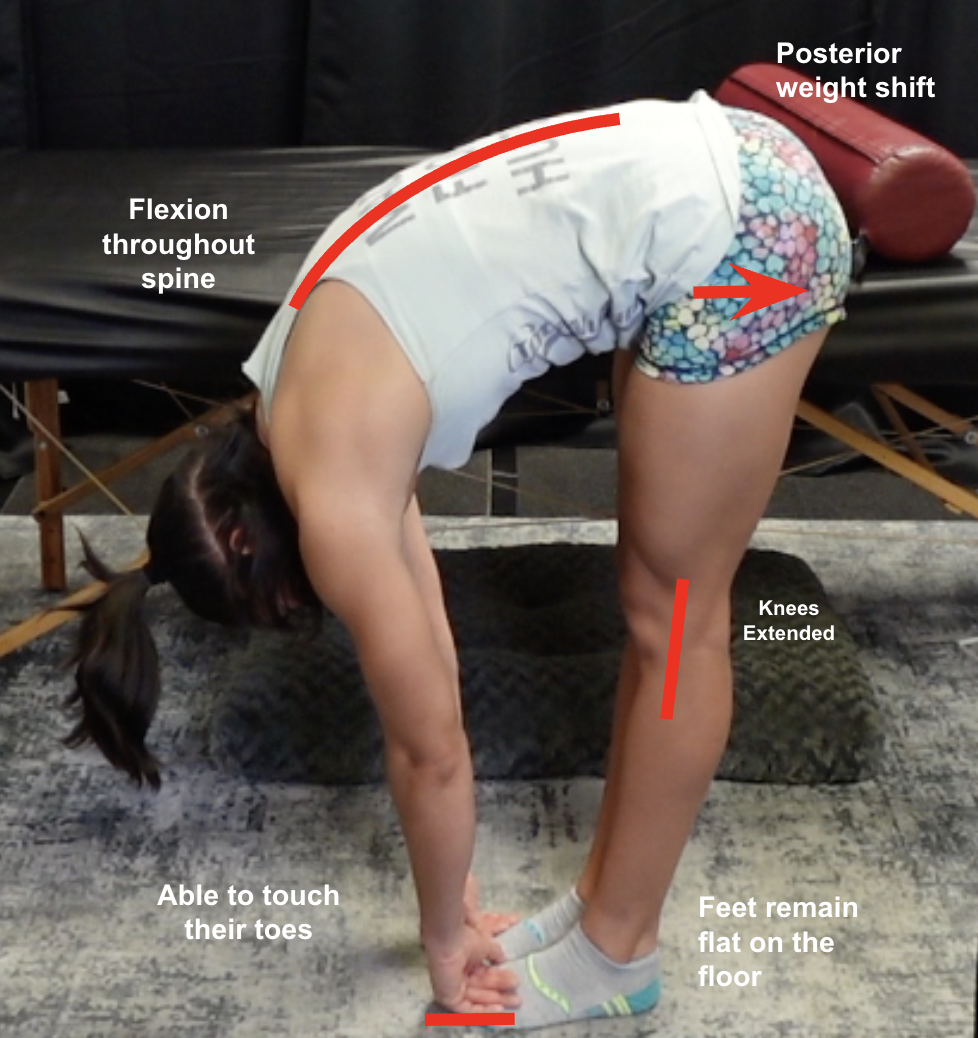
Common Compensations (What to watch for):
Bending the knees
Heels lifting off the floor
Cervical extension
If our client has pain, engages in any common compensations, or cannot meet the requirements of the movements, then we need to examine further where potential limitations may be present. It's important to remember that with the Global Movements (MacroMovements), we're watching multiple segments move, and were witnessing a display of both motor control and mobility capability of the body. In order to know where to apply our therapies and what techniques will best serve our client, we must move to limitation locators
You can take the TheraPro Assessment Method Online course to learn more about assessing movement, or you can join Patreon to get access to exclusive assessment videos and content like this.